

Protein is often discussed like a trend, something you “add” when you start going to the gym or trying to lose weight.
But the truth is simpler and more important:
Protein is a daily requirement, not a fitness upgrade.
Your body doesn’t store protein the way it stores fat or carbohydrates. Whatever protein you don’t consume today, your body can’t magically use tomorrow. And that’s why understanding how much protein you actually need matters far more than chasing random numbers online.
Why Protein Is Non-Negotiable for the Human Body
Every single day, your body is in a cycle of breakdown and repair.
- Muscles experience wear from movement
- Skin cells renew
- Hormones and enzymes are produced
- Immune cells are formed and replaced
Protein is the raw material for all of this.
When intake is consistently low, the body adapts, but not in a good way. It breaks down muscle tissue, slows recovery, and prioritises survival over performance. Over time, this shows up as fatigue, weakness, slow healing, and poor metabolic health.
There Is No “Perfect” Protein Number for everyone.
One of the biggest nutrition myths is that everyone needs the same amount of protein.
In reality, your daily protein requirement depends on three main factors:
- Age – how fast your body builds and repairs tissue
- Gender – differences in lean muscle mass and hormones
- Activity level – how much wear and tear your body experiences
Let’s look at each in detail.
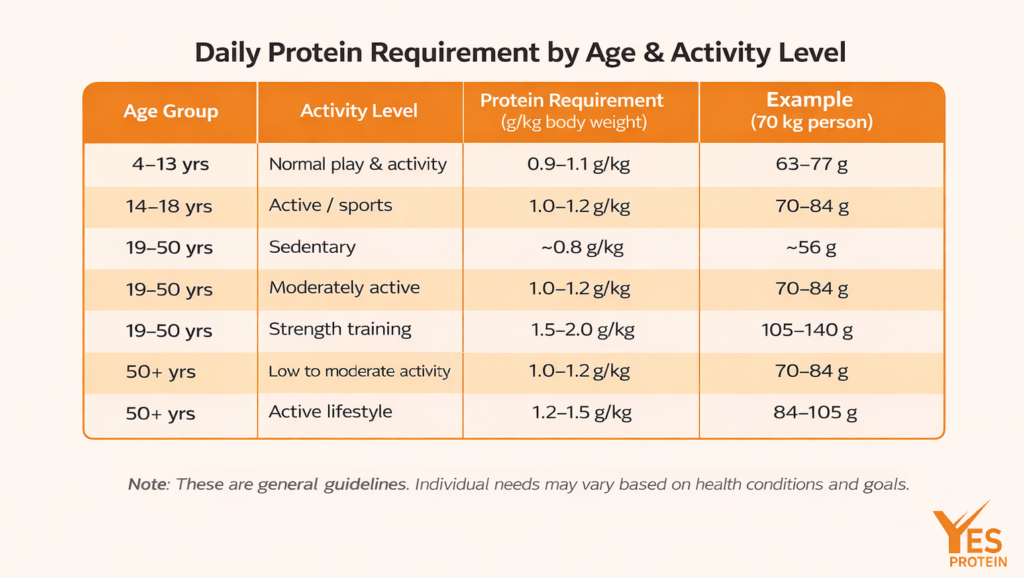
Daily Protein Requirement by Age
Children (4–13 Years)
Recommended intake:
~0.9–1.1 grams per kg of body weight
This phase is all about growth—bones lengthen, muscles develop, and the brain matures. Protein supports not just physical height but also immune strength and cognitive development.
Low protein intake during childhood doesn’t always show immediate symptoms, but it can affect long-term growth patterns.
Teenagers (14–18 Years)
Recommended intake:
~1.0–1.2 g/kg
Teenage years involve rapid growth, hormonal changes, and increased physical activity. Protein demand rises sharply during this stage.
Skipping adequate protein here can lead to:
- Poor muscle development
- Low energy levels
- Reduced athletic performance
This is one of the most protein-sensitive life stages.
Adults (19–50 Years)
Recommended intake:
~0.8–1.0 g/kg (for sedentary adults)
At this stage, protein is needed mainly for maintenance and repair. Unfortunately, this is also the age group most likely to underconsume protein especially in carb-heavy diets.
Even mild protein deficiency over the years can contribute to:
- Gradual muscle loss
- Slower metabolism
- Reduced strength and stamina
Older Adults (50+ Years)
Recommended intake:
~1.0–1.2 g/kg
As we age, the body becomes less efficient at using protein. Muscle breakdown accelerates, and recovery slows.
This is why protein intake should actually increase with age, not decrease. Adequate protein helps:
- Preserve muscle mass
- Improve balance and mobility
- Reduce risk of frailty
Protein Requirement by Gender
For Women
Women generally require slightly less protein than men due to lower average muscle mass. However, protein needs increase significantly during certain phases:
- Pregnancy and breastfeeding
- Strength training or endurance exercise
- Menopause and post-menopause
Adequate protein supports hormone balance, bone density, and lean body mass, areas where women are often nutritionally underserved.
For Men
Men typically have higher lean muscle mass, which increases protein requirements. Protein plays a key role in:
- Muscle maintenance
- Physical performance
- Hormonal health
Low protein intake in men often shows up as fatigue, muscle loss, or reduced strength—even if calorie intake seems sufficient.
Protein Requirement by Activity Level
This factor can change your protein needs more than age or gender.
Sedentary Lifestyle
(Desk job, minimal movement)
Protein: ~0.8 g/kg
Enough for basic maintenance, but not optimal for strength or long-term muscle preservation.
Moderately Active
(Walking, yoga, light workouts)
Protein: ~1.0–1.2 g/kg
Supports recovery, energy balance, and better body composition.
Physically Active / Strength Training
(Gym, sports, intense workouts)
Protein: ~1.5–2.0 g/kg
Training breaks muscle tissue. Protein is what repairs and rebuilds it. Without enough protein, workouts create stress without adaptation.
Putting It Into Perspective (Simple Example)
A 70 kg adult:
- Sedentary → ~55–60 g protein/day
- Moderately active → ~70–85 g/day
- Strength training → ~105–140 g/day
The difference isn’t small—it’s the difference between recovery and constant fatigue.
Common Protein Mistakes People Make
Most protein issues aren’t about ignorance—they’re about habits.
- Skipping protein at breakfast
- Relying on one protein-heavy meal per day
- Assuming “dal is enough” without portion awareness
- Thinking protein is only for bodybuilders
Protein works best when:
- Distributed across meals
- Sourced from clean, digestible foods
- Matched to your lifestyle, not trends
Where Peanut Butter Fits Into a Protein-Balanced Diet
Peanut butter is not meant to replace full protein meals, but it works well as a supporting source.
When made with quality peanuts and minimal processing, it provides:
- Moderate protein
- Healthy fats
- Better satiety
This is why Yes Protein, a premium peanut butter brand in India, focuses on clean ingredients and nutritional balance rather than just flavor.
Final Thought
Protein isn’t about extremes. It’s about consistency and understanding your body’s needs.
Your age defines how fast you rebuild.
>>Your gender influences muscle mass and recovery.
>Your activity level determines how much repair is required.
Once you align protein intake with these factors, nutrition stops feeling confusing—and starts feeling effective.
Frequently Asked Questions (FAQs)
How much protein does an average Indian adult need daily?
An average adult needs around 0.8–1.0 grams of protein per kg body weight, depending on activity level. Active individuals need more.
Is high protein intake safe for daily consumption?
Yes, for healthy individuals. When consumed from balanced, clean food sources, protein supports muscle, metabolism, and recovery without harming the body.
Do women need less protein than men?
Generally yes, due to lower muscle mass. However, women may need equal or higher protein during pregnancy, workouts, or after 40.
Can I meet my protein needs without supplements?
Absolutely. Protein needs can be met through food sources like pulses, dairy, nuts, seeds, eggs, and quality peanut butter as part of a balanced diet.
What happens if I don’t eat enough protein daily?
Low protein intake over time can lead to muscle loss, fatigue, weak immunity, slow recovery, and poor metabolic health.